File 04
04 / 07
The price of the ghost
A closed distillery produces nothing more: every bottle opened is lost to the world's stock for good. This unforgiving arithmetic sits at the heart of the Caroni fever.
The mechanics of scarcity
The reasoning behind Caroni's standing is simple, almost brutal. The starting stock is finite: a few thousand casks, and nothing will ever be added. Each bottling consumes a share; each bottle drunk disappears. Supply can only shrink, while demand has kept rising as the rum's reputation spread.
Add to that an effect of narrative: the story of a Trinidadian distillery swallowed by the decline of sugar, revived by a visionary bottler, has all the makings of a myth. And collectors buy a story as much as a liquid.
The angels' share, an accelerant of scarcity
In Trinidad the tropical heat devours rum far faster than in Scotland: the famous angels' share — the fraction that evaporates each year — is considerable there. A forgotten cask empties at speed. The most dizzying example is two casks from 1976 that, after more than twenty years, held no more than seven litres each. Every passing year not only cuts the number of bottles available: it physically reduces the rum itself.
This evaporation explains a striking figure: of the 1,276 casks Velier eventually acquired, only 140 were left to bottle in 2018 — the rest having been bottled… or drunk by the angels.
From liquidation to a rising market: a timeline
The fate of the casks between 2000 and 2010 reads like a serial drama. Two official sales simply failed before everything ended up at Angostura.
-
2000
The inventory
The Main Rum Company counts 18,533 casks and values them at just over 20 million TT dollars — far short of the billion the press fantasised about.
-
2005-06
Velier leads the way
Luca Gargano buys the first lots (120 then 78 casks) and launches the 'black bottles'.
-
2008
The failed auction
On 9 October, RDTT puts the casks up for auction. Reserve price too high: no sale. Buyers leave with their cheques.
-
2009
Fruitless tender
A second attempt at a public sale also fails; the casks are stored at Angostura.
-
2010
TDL takes the rest
Trinidad Distillers Ltd (Angostura) buys all the remaining casks. The end of RDTT — and of the Caroni era.
A price trajectory
Without quoting figures that would quickly date, the underlying trend is documented and striking: bottles sold for a few tens of euros in the early series now reach, on the secondary market, very high multiples. Old single casks, the strongest proofs and small bottle-count editions concentrate most of that appreciation.
Caroni is often named alongside the great closed rum distilleries (“ghost distilleries”) as one of the most dynamic segments of collectible spirits.
Long after its closure, Caroni follows in Van Gogh's footsteps: a product no one wanted while it lived, become impossible to find once it was gone.
Approaching the collection with judgement
A few common-sense markers, for the well-informed:
- Buy to drink first. Tasting pleasure is the only criterion that never depreciates.
- Check the provenance. A coherent label, fill level, capsule, cask traceability: counterfeits exist in the priced segments.
- Document each bottle. Vintage, bottler, strength, cask number: this information makes both value and liquidity.
- Store upright, away from light and temperature swings.
- Keep perspective. A fast-rising market can correct; commit only what you are happy to hold for the long term.
This page offers cultural and historical context. It is neither investment advice nor an incitement to buy for speculative purposes.
18,533 casks
Stock recorded at the 2000 inventory
7 litres
Left in a 1976 cask after 24 years of angels
7.8 M TT$
Reserve price of the failed 2008 auction
x100
Multiple reached by the 1982 Full Proof since release
Collector pieces
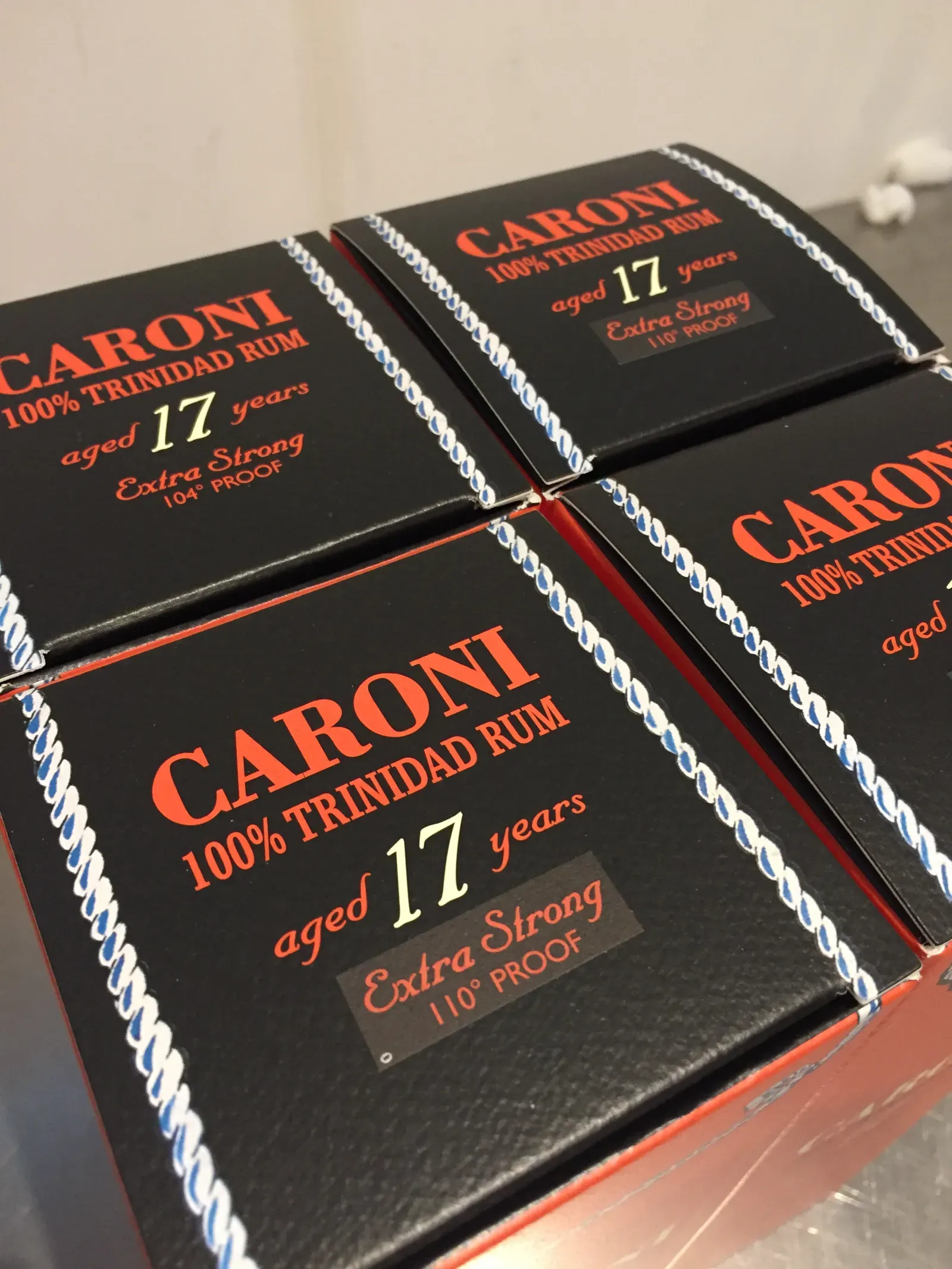
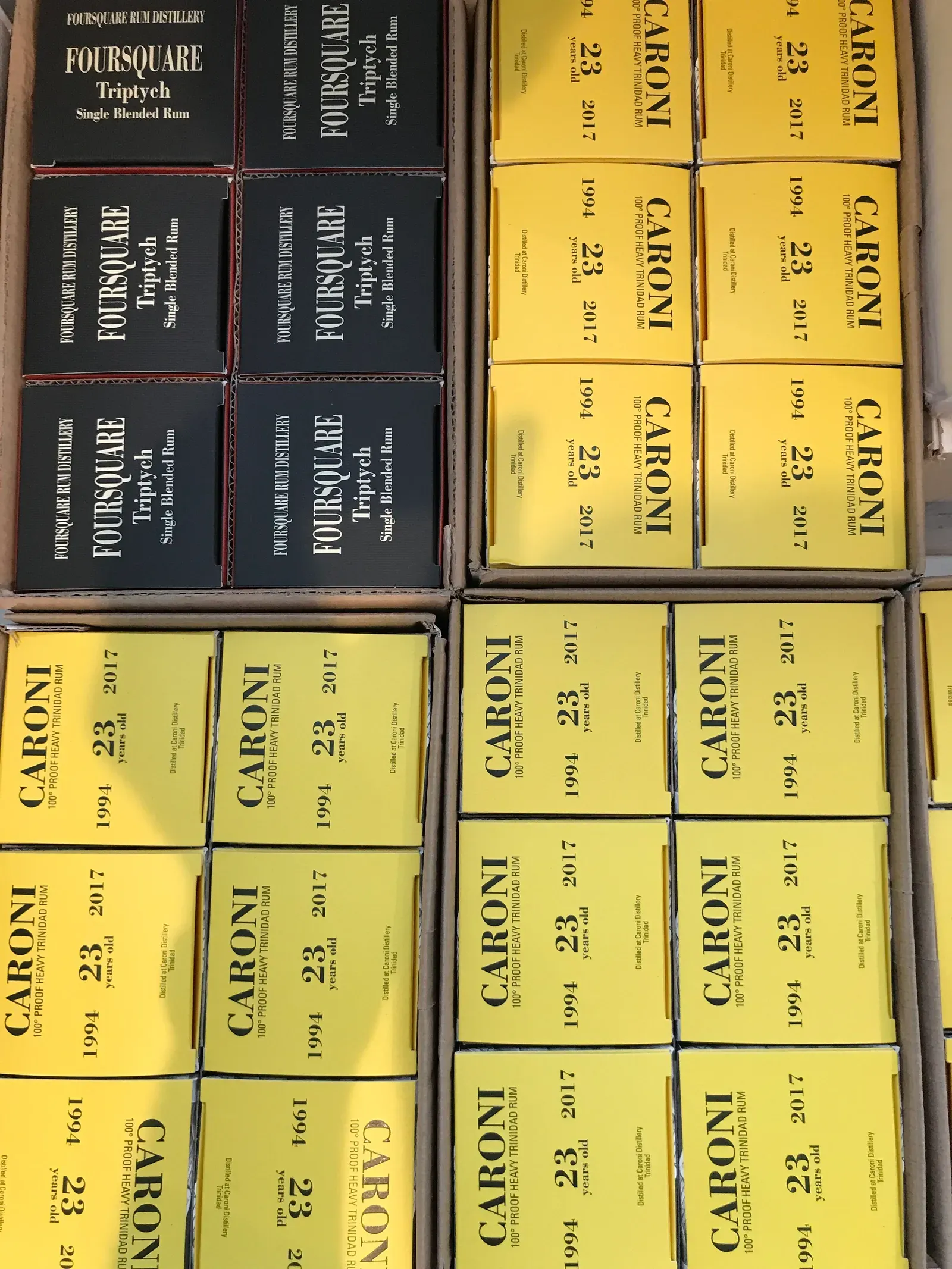
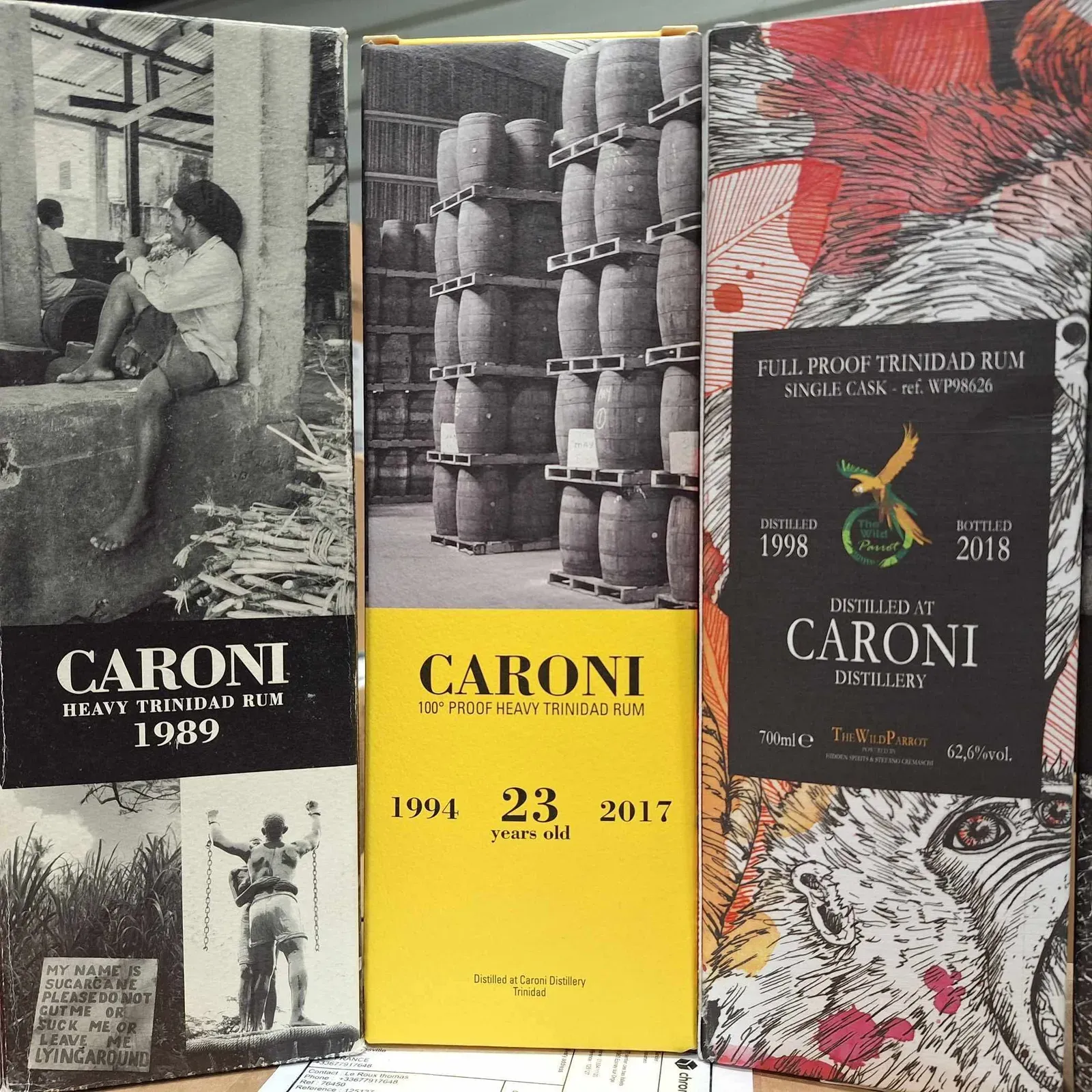
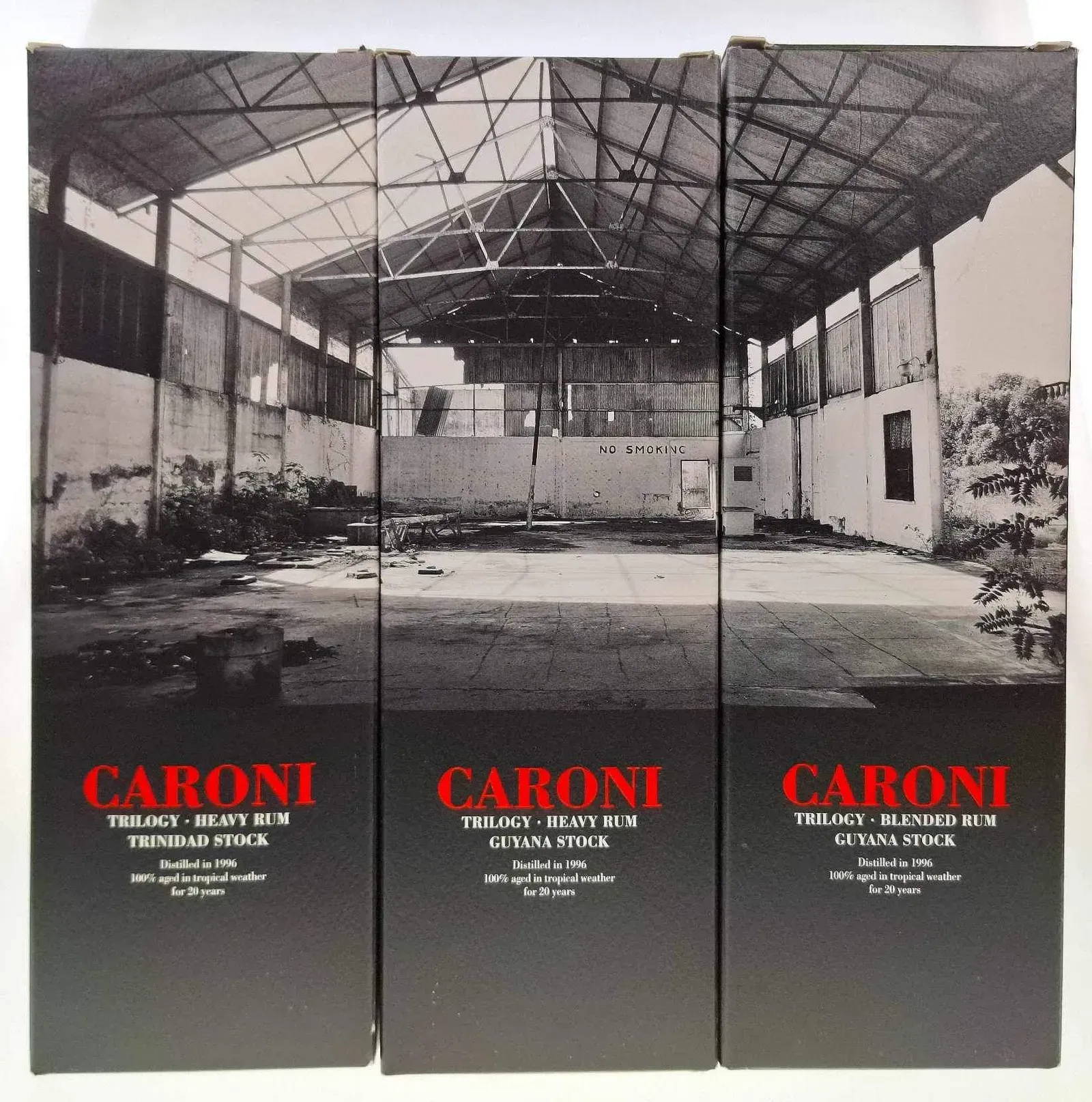
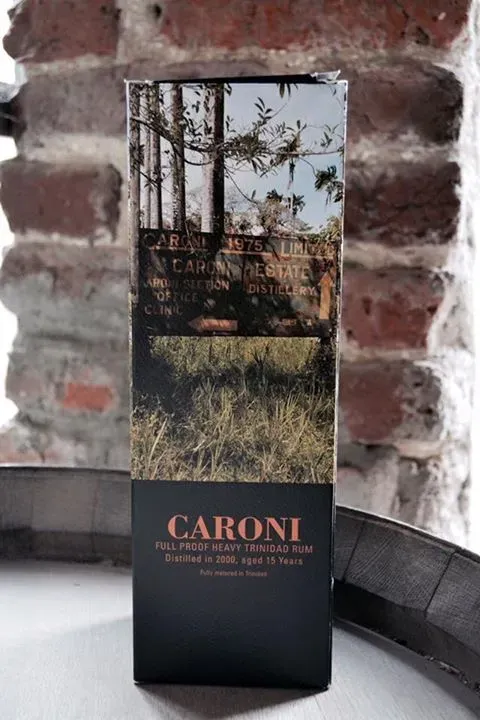
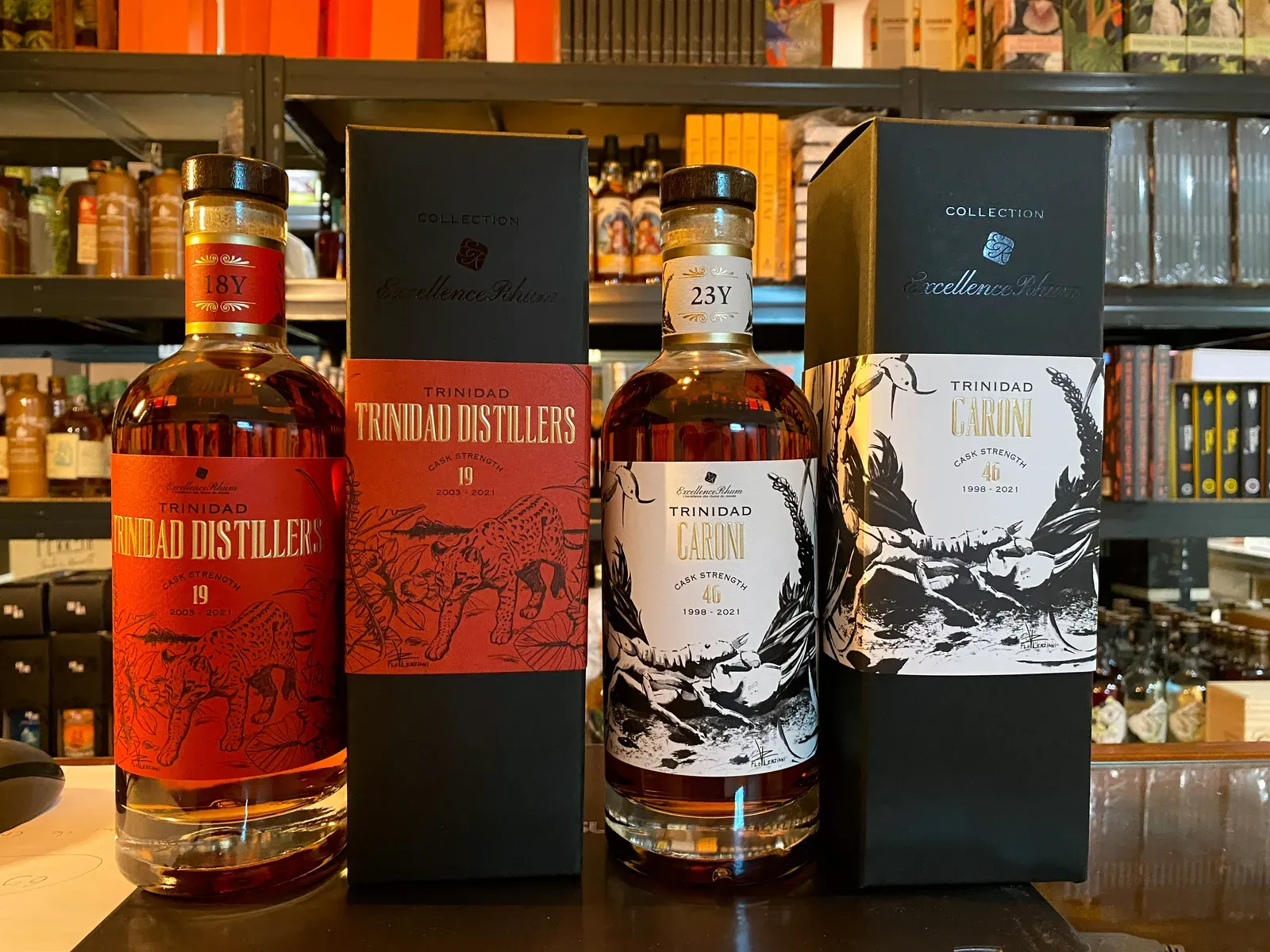
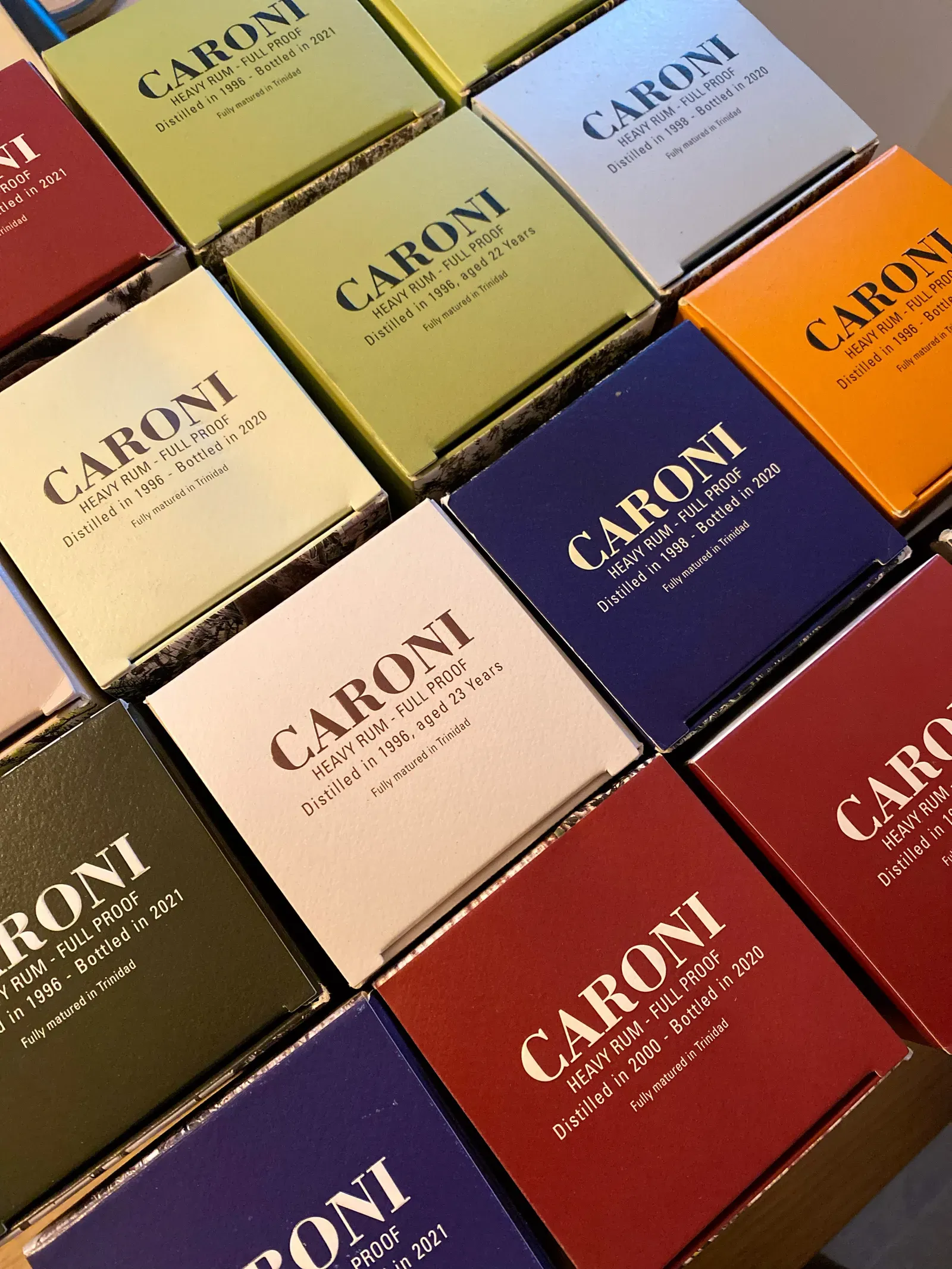
Caroni boxes and cases — objects that became collector pieces.