File 03
03 / 07
The second life of the casks
Caroni would have been just another forgotten distillery without the bottlers who released its casks one by one. First among them: Velier, whose work redefined the value of collectible rum.
Velier, or the birth of a myth
The modern story of Caroni is inseparable from one man: Luca Gargano, head of the Genoese house Velier. It all began by chance. In October 2004, while in Guyana to collect old photographs, he learned that the Caroni distillery was in liquidation in Trinidad. He asked to see the cask stock. An employee showed him dormant barrels — 1982, 1983, 1984… — and confirmed the paperwork was in order. Gargano understood at once: he had stumbled on a forgotten treasure.
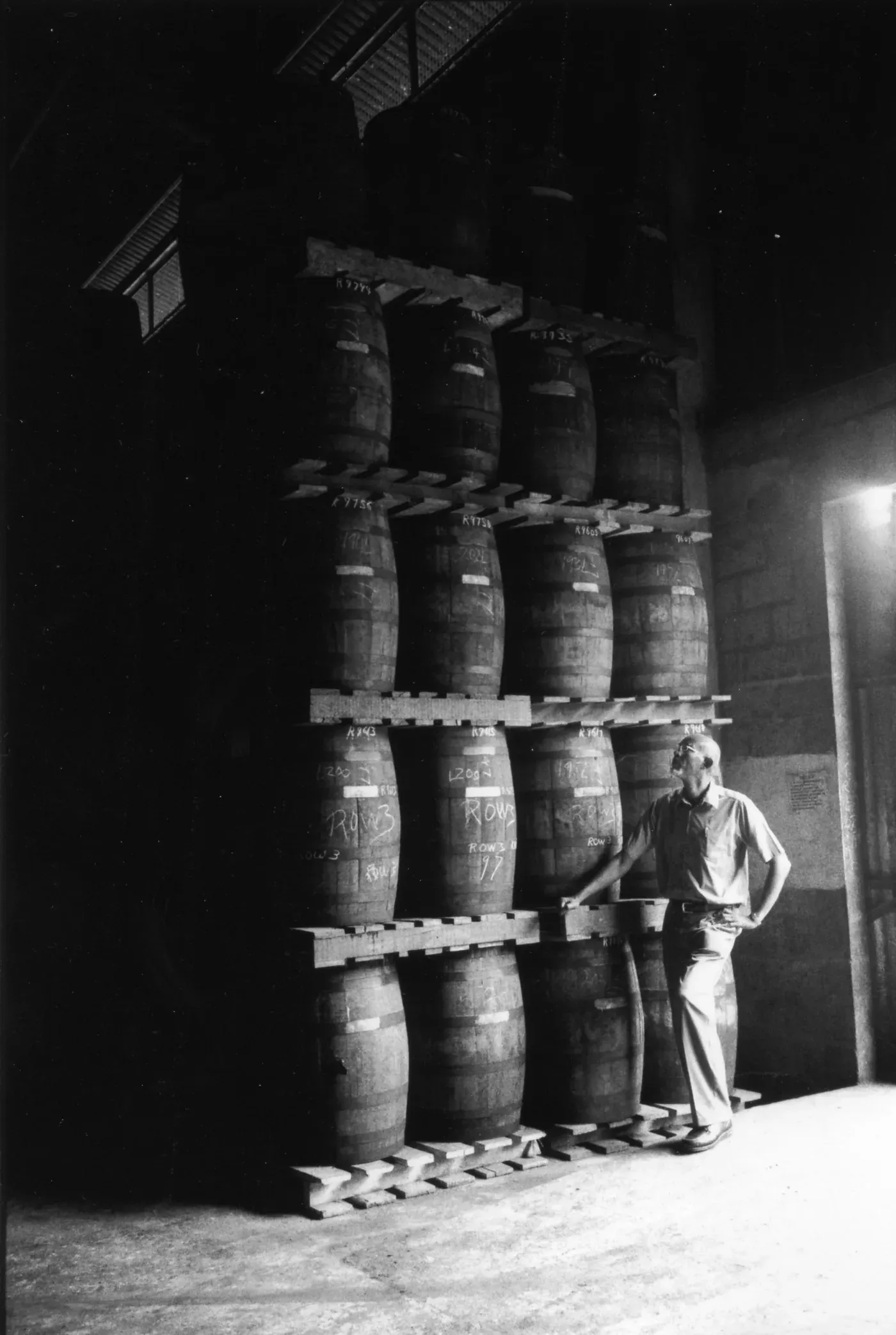
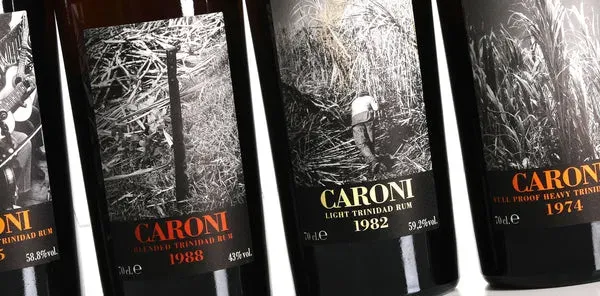
He was directed to Rudy Moore, head of the company running the liquidation. When Gargano tasted the first samples, he knew he was dealing with a rum unlike anything he had met. Rather than blending the casks to smooth the profile, he took the opposite path: bottling at high strength, cask by cask or in small batches, stating the vintage with minimal cosmetics. These were the famous "black bottles", austere, their labels reusing the photographs taken on site — notably that of Rudy Moore, planted in front of stacks of casks.
The discovery, 9 December 2004
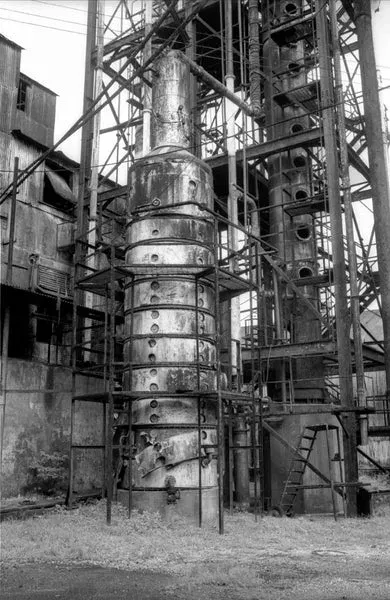
The way Gargano tells it, the story reads like a fable. That day he landed in Trinidad with the photographer Fredi Marcarini to visit two distilleries: Angostura, then Caroni. The site had been abandoned for a year — a scene "like The Day After Tomorrow", he would say, the tower of columns already leaning dangerously and the vegetation reclaiming the ground. At the entrance, a woman still stood guard over a gate that no longer protected anything. Behind it, a warehouse held thousands of sleeping casks: the oldest going back to 1974, most from the 1983-1985 vintages. A few years earlier, the collapse of sugar had thrown some 13,000 workers out of a job. Standing before those forgotten barrels, Gargano knew he was looking at "a treasure of the Caribbean". He would later tell the whole adventure in his book Nomade tra i barili.

Every time I tell this story, I wonder whether it really happened.
The Velier choice: ageing on site
Where many would have shipped the casks back to Europe, Velier made the opposite, decisive bet: to let the rum age on site, in Trinidad, in tropical heat. Ageing there is far faster and more intense than in a continental cellar, but the angels' share is staggering. Each cask was then bottled individually, at natural strength, with no reduction and no smoothing blend. The bottles, matte black, carry historical photographs of the distillery; the runs are deliberately small. It is this combination — tropical ageing, cask strength, small batches, a documentary aesthetic — that makes the Velier signature.

That stance — transparency, cask strength, respect for character — turned an industrial rum into an object of serious tasting. It first drew mockery: how could anyone love a rum above 60%? Then came the "Caronimania". From 2010 the registered trademark Rum Caroni spread beyond Italy and Gargano partnered with La Maison du Whisky to absorb the volumes that followed.
Caroni is a gift from heaven.
The biggest lot came last: the final Caroni casks, bought back from Angostura, which had recovered them. As the French distributor Dugas — a rival of La Maison du Whisky — belonged at the time to the same group as Angostura, Gargano had to be crafty: Thierry Bénitah was introduced on site as "René Thierry", a Swiss consultant. The deal covered 671 casks from the 1996, 1998 and 2000 vintages.
Three ways to bottle Caroni
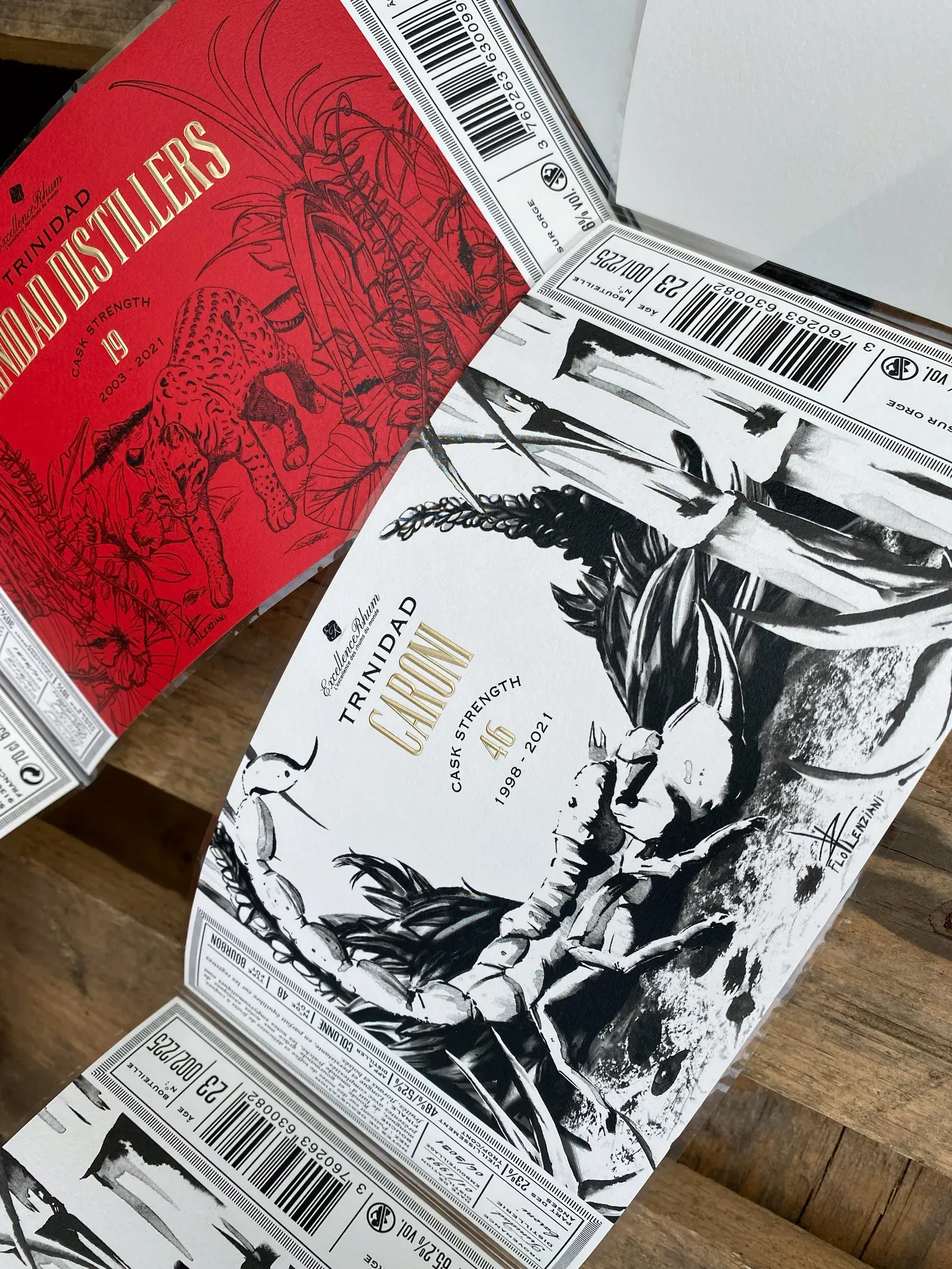
Under the Velier banner, the Caroni catalogue is organised into broad families, each with its own logic and aesthetic.
The Standard Range, by contrast, aims for volume and relative accessibility: these are multi-vintage blends, with vintage labels bearing a rope motif drawn from a 1940s design. Here you find the Trinidad 12, 15, 17 and 21-year-old expressions, meant to introduce the style without heading straight for the rare single cask.

2004
Stock discovered in Guyana
120 casks
First lot bought by Velier
1276 casks
Total acquired by Velier over the years
140 casks
Left in 2018, the rest drunk or evaporated
Who bottles Caroni?
The founding bottler
Velier
Luca Gargano's Genoese house bought 1,276 casks in total over the years and built the Caroni legend, vintage after vintage, from 2005.
The brokers
E&A Scheer / Main Rum
The world's largest bulk-rum trader and its Liverpool subsidiary handled huge volumes of Caroni — often resold, for years, without ever bearing its name.
The constellation
Independent bottlers
Bristol Spirits, Cadenhead, Whiskybroker, Nobilis, Silver Seal and many others released their own single casks: cask strength, various finishes, differing proofs.
Scheer & Main Rum: the rum in the shadows
Before Velier made it an icon, Caroni moved mainly through a discreet giant: E&A Scheer, the world's largest bulk-rum trader, founded in Amsterdam in 1712. Between 1995 and 2005 Scheer bought several isotanks of "heavy" Caroni every year, blending it with light rums — never selling it under its own name. Its Liverpool subsidiary, The Main Rum Company, specialised in rare casks, still holds a sizeable stock today that continues to age.

It was these two houses that, in 2000, were tasked with valuing the stocks of the distillery to be liquidated. A good share of the Caroni released by independent bottlers — Bristol Spirits, Cadenhead, Whiskybroker, Aceo… — first passed through this broker circuit before reaching the bottle.
Reading a Caroni label
Caroni labels are full of useful information. Learning to decode them is the collector's first skill:
- Distillation year — often front and centre (e.g. “1996”). Since production ended in 2003, no vintage can be later.
- Bottling year — the gap from distillation gives the real age.
- Heavy / light — sometimes specified; it largely sets the profile.
- Strength — from reduced proof up to very high cask strength (“full proof”).
- Ageing type — “full tropical” (entirely in Trinidad) or partial European ageing (“continental”).
- Cask number and bottle count — a mark of rarity for single casks.
Golden rule: a vintage later than 2003 on a “Caroni” label should raise a flag. The distillery was no longer producing.
The vintages that matter
Without drawing up a price list — which moves too fast — the broad families can be placed: the distillations of the 1990s (notably 1992, 1994, 1996, 1998) make up the bulk of the famous bottlings; older distillations from the 1980s, and above all the mythical 1974, reach peaks of rarity; the very last vintages, up to 2000, close out a production that is now finished.
The 1974 nicely illustrates how subtle the reading can be: its colour is markedly paler than that of younger Caroni. Why? It is a rum housed in casks whose internal char had been largely removed, which limits the tannins and the depth of colour. On a Caroni label, then, colour does not tell the whole story of age.
To track what actually circulates today, nothing replaces keeping an eye on specialist merchants and auction houses.
A few bottlings
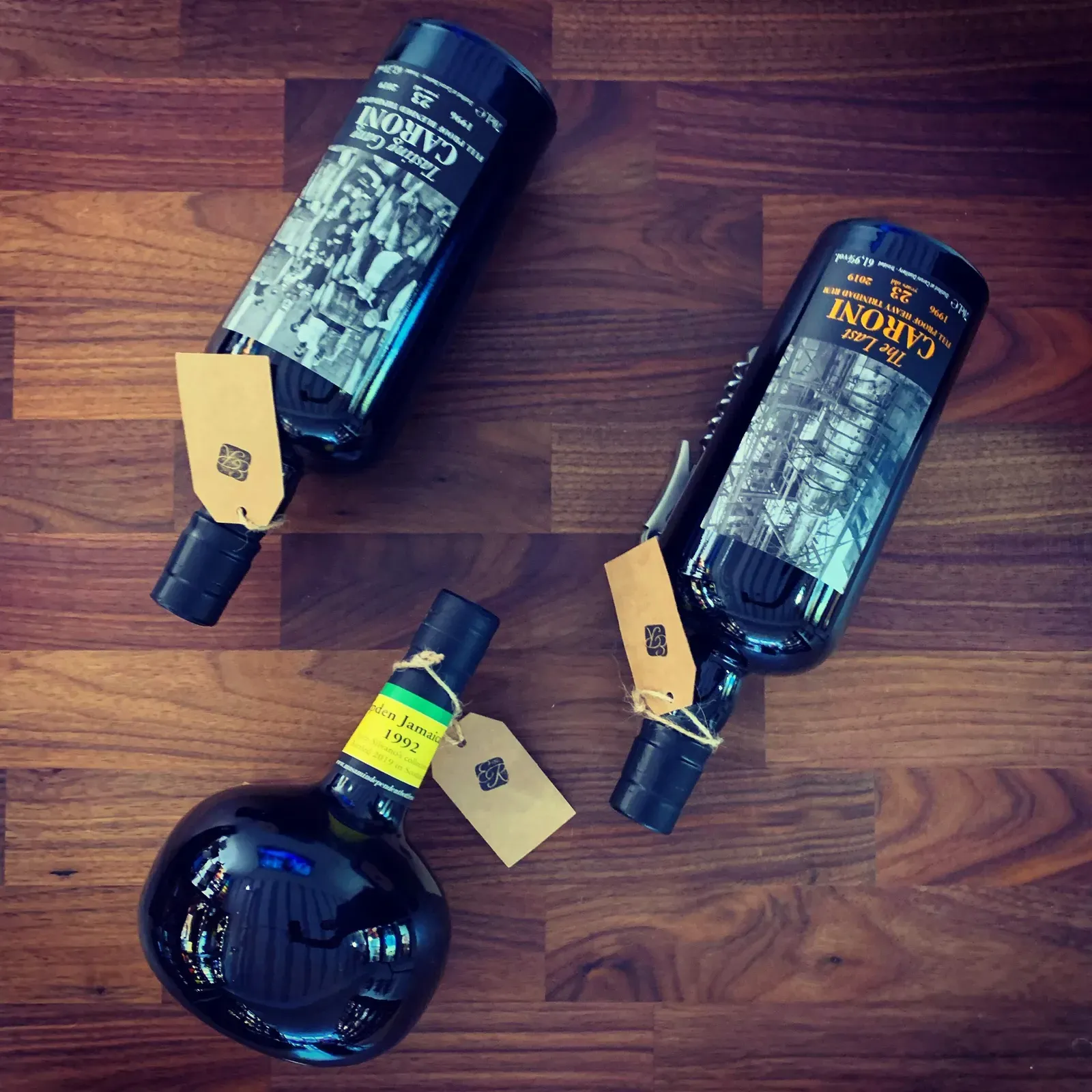
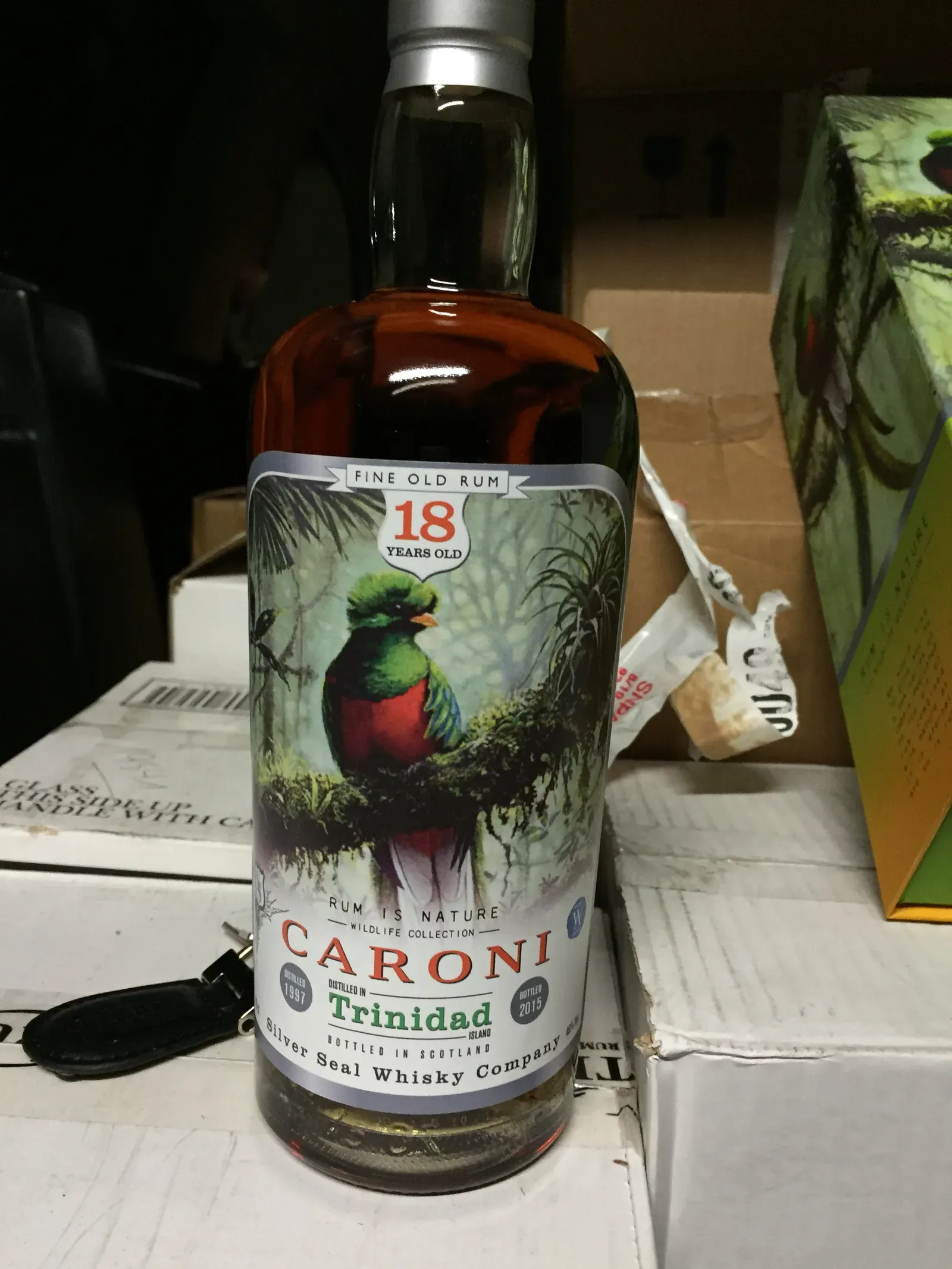
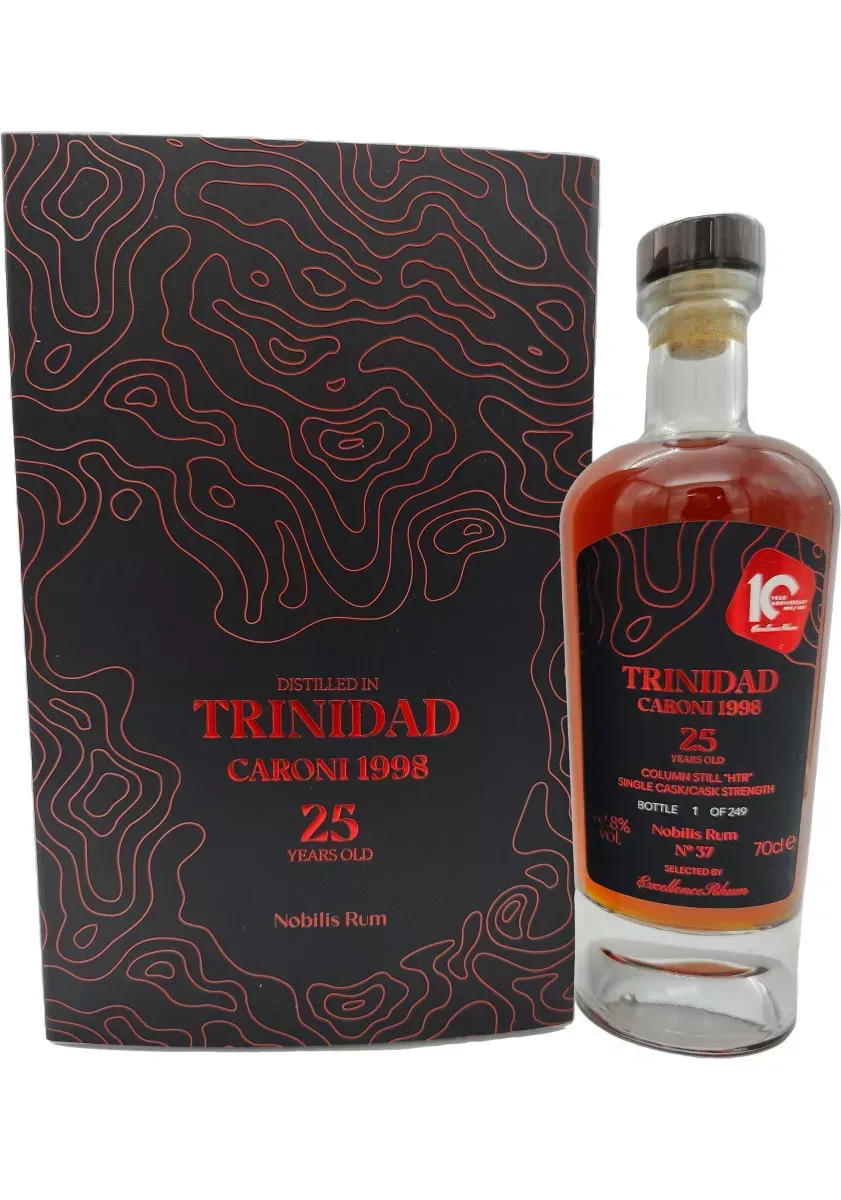
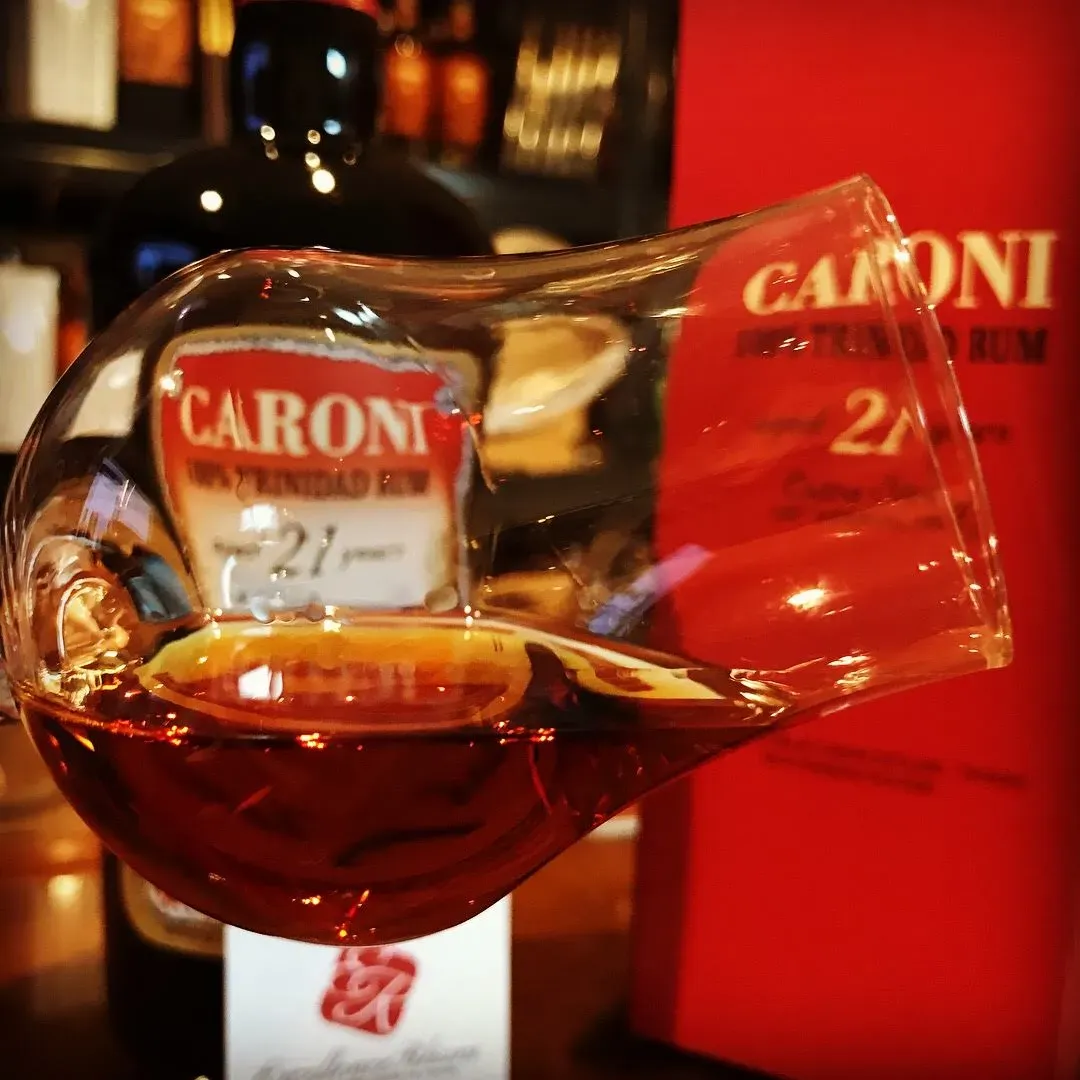
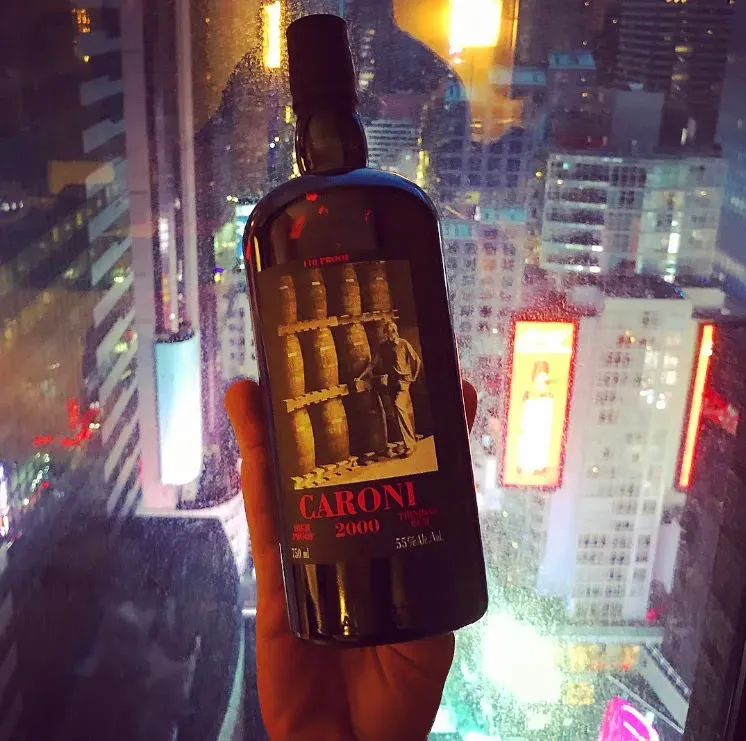
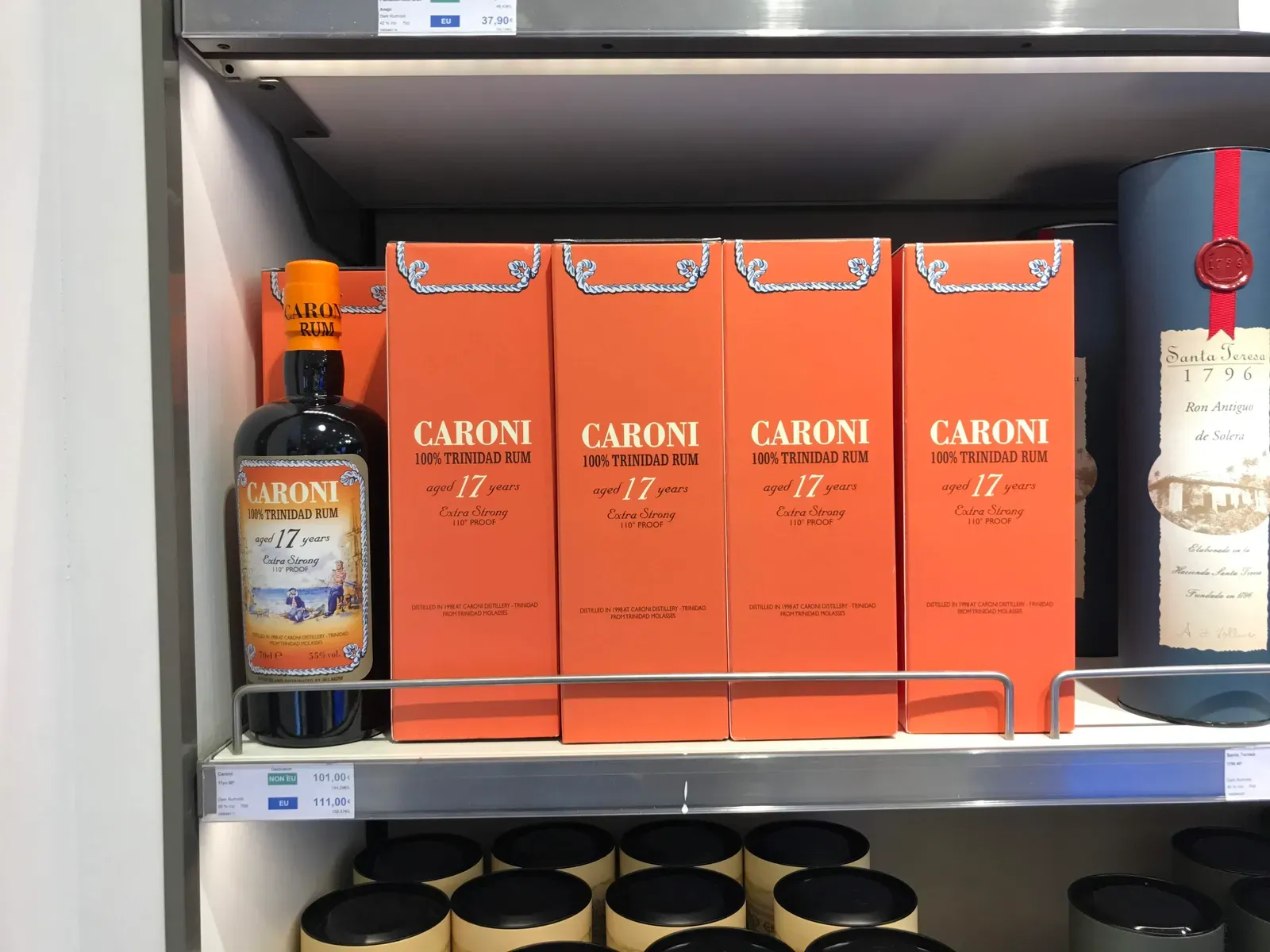
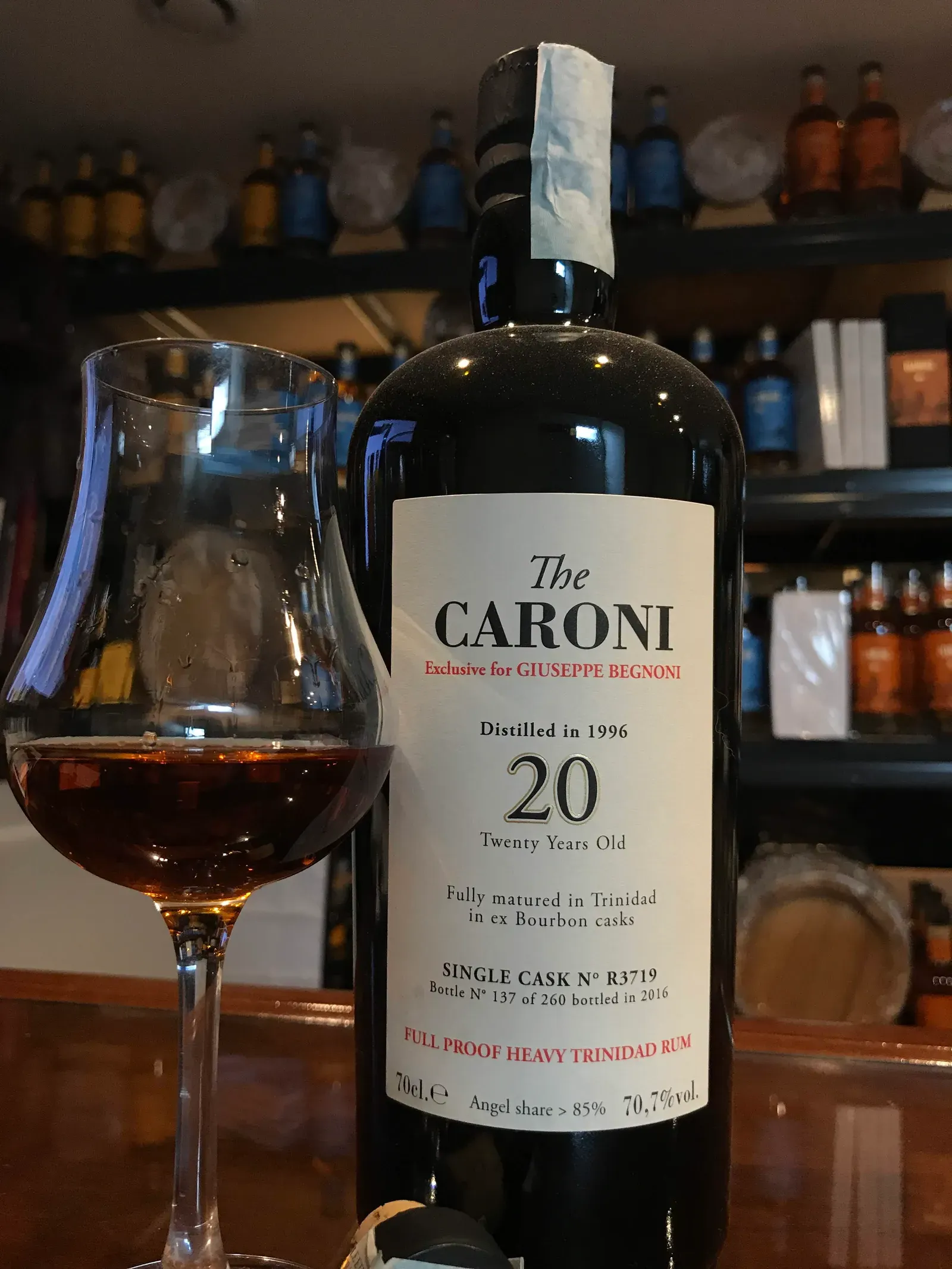
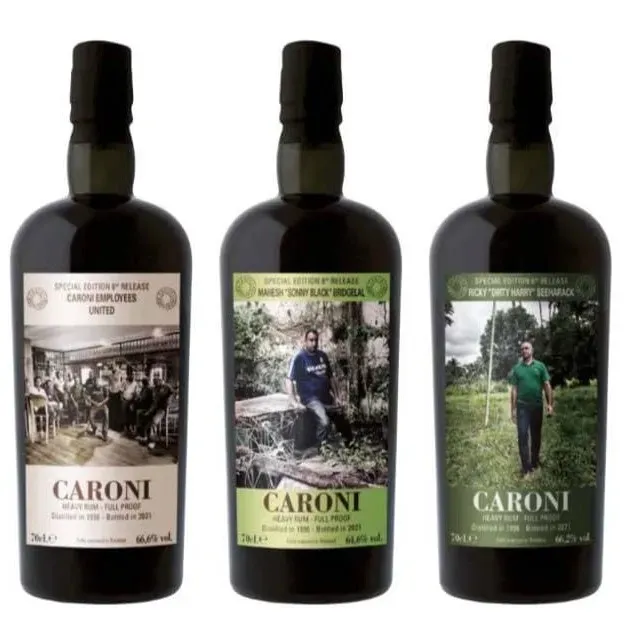
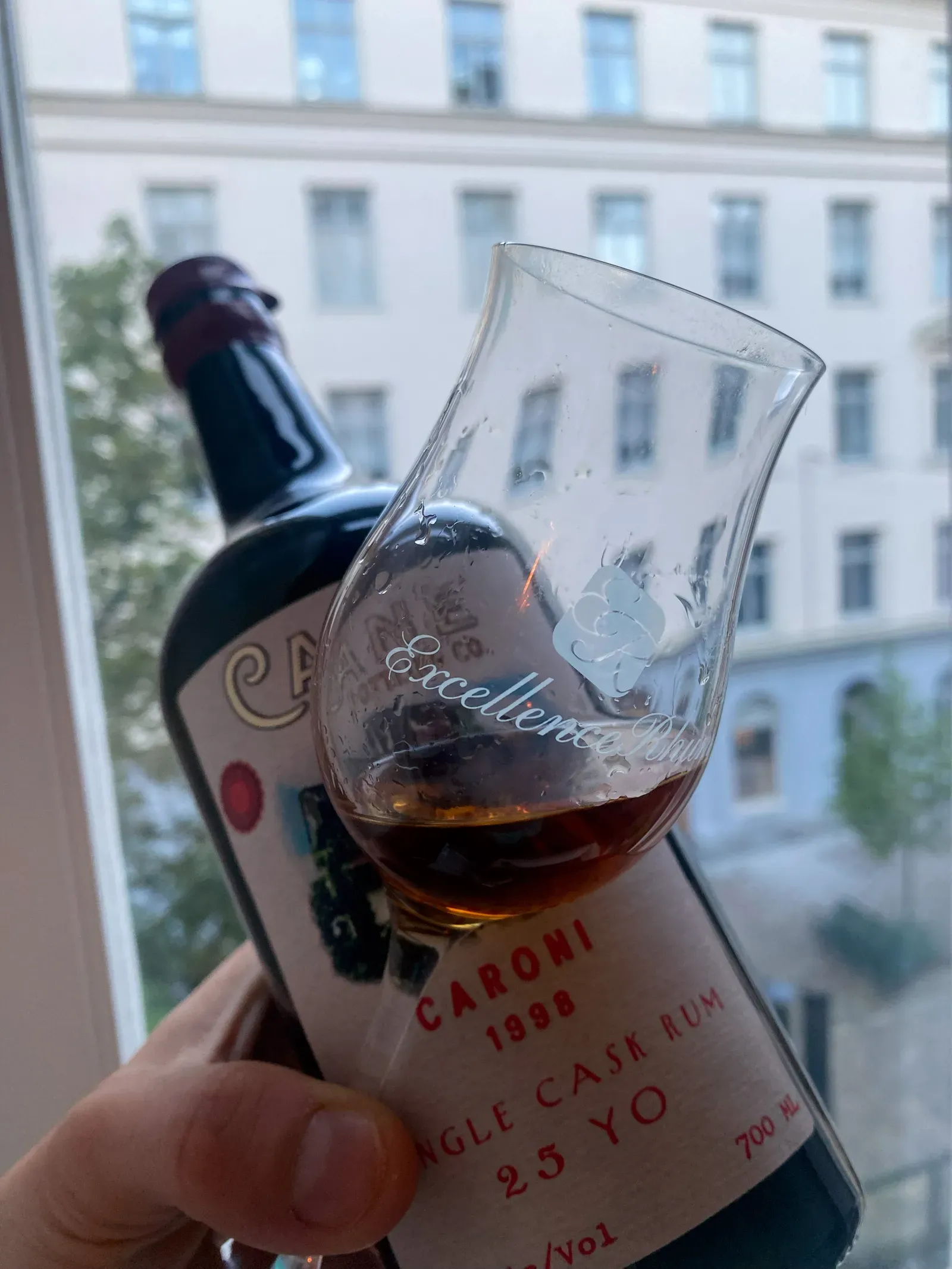
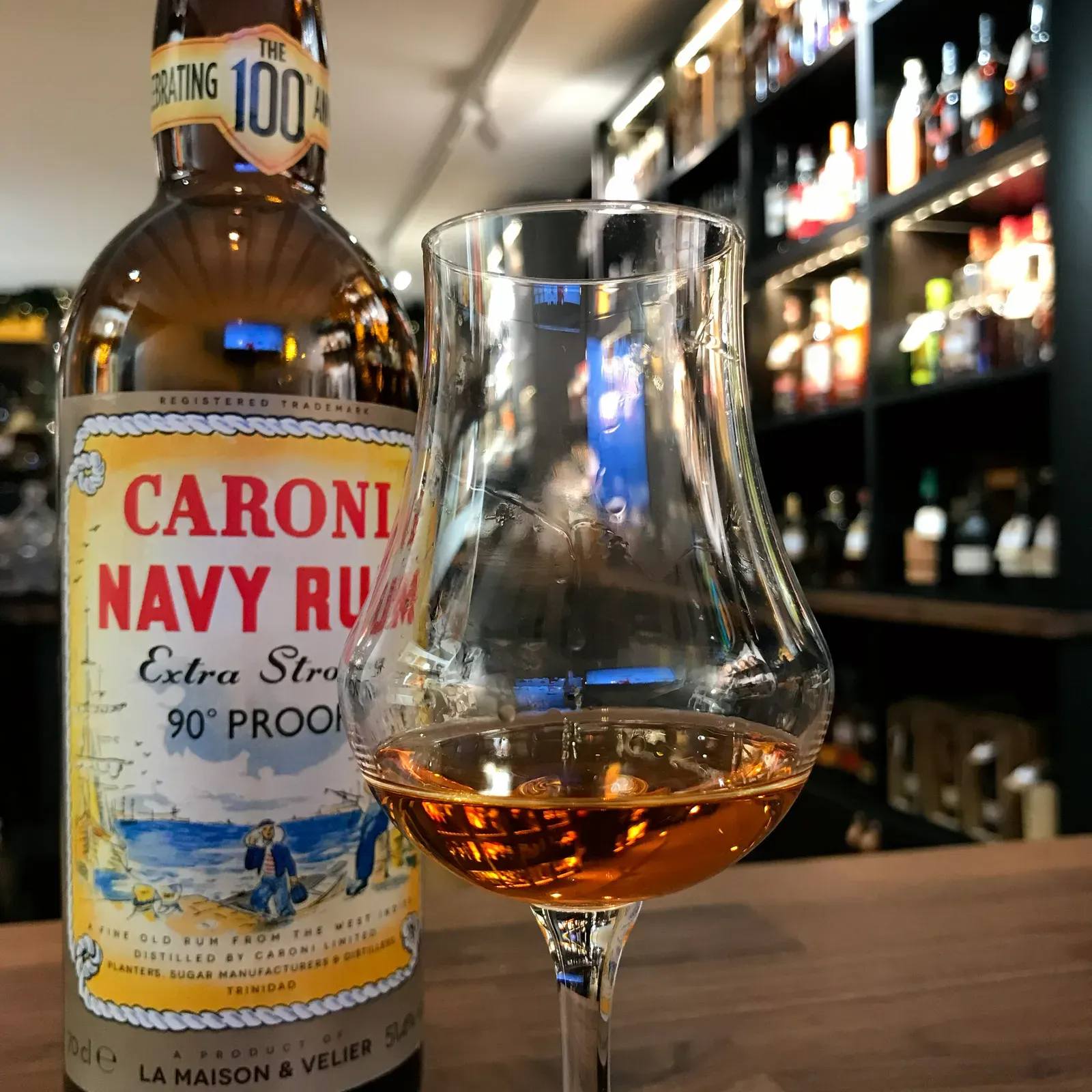
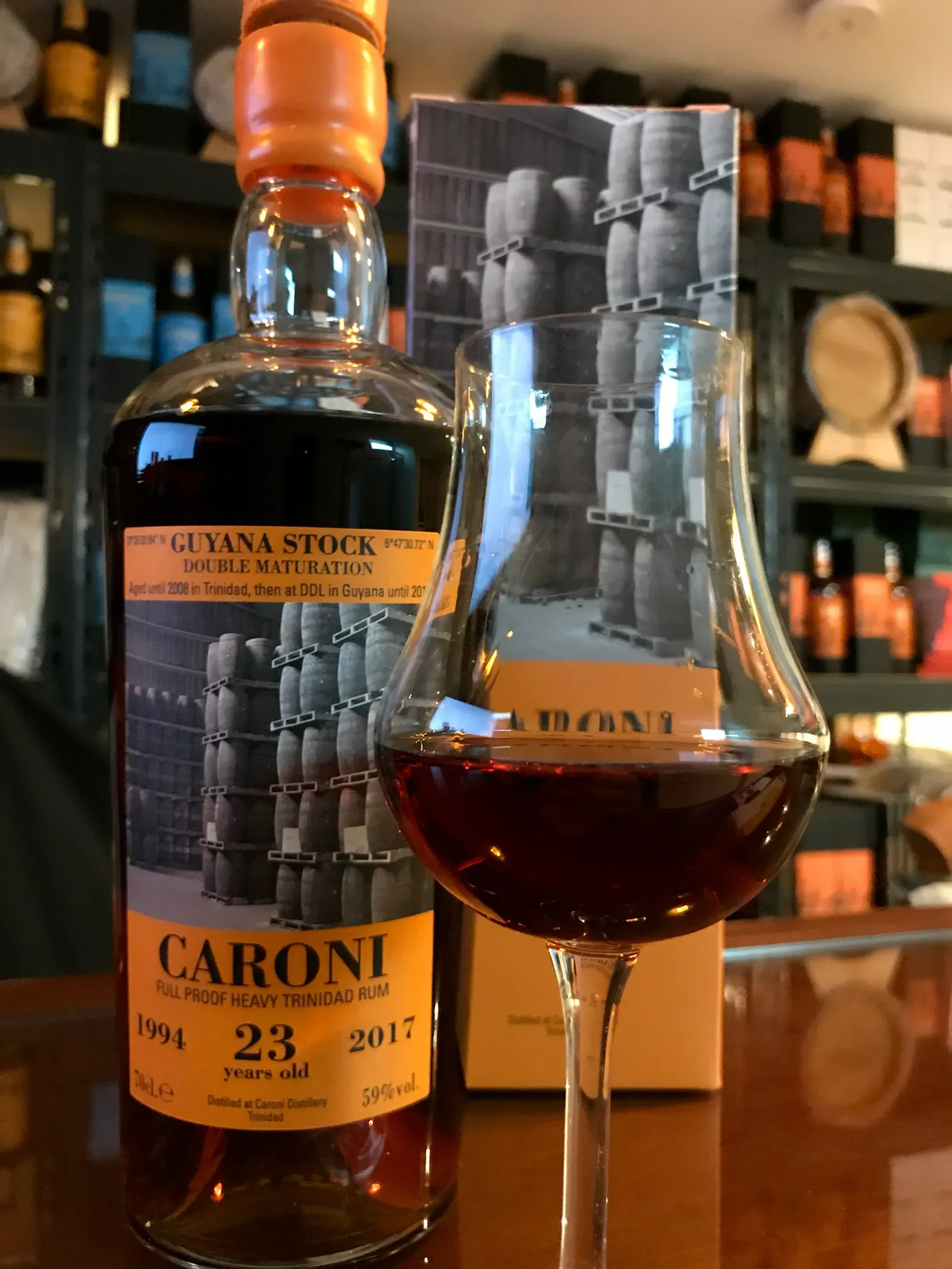
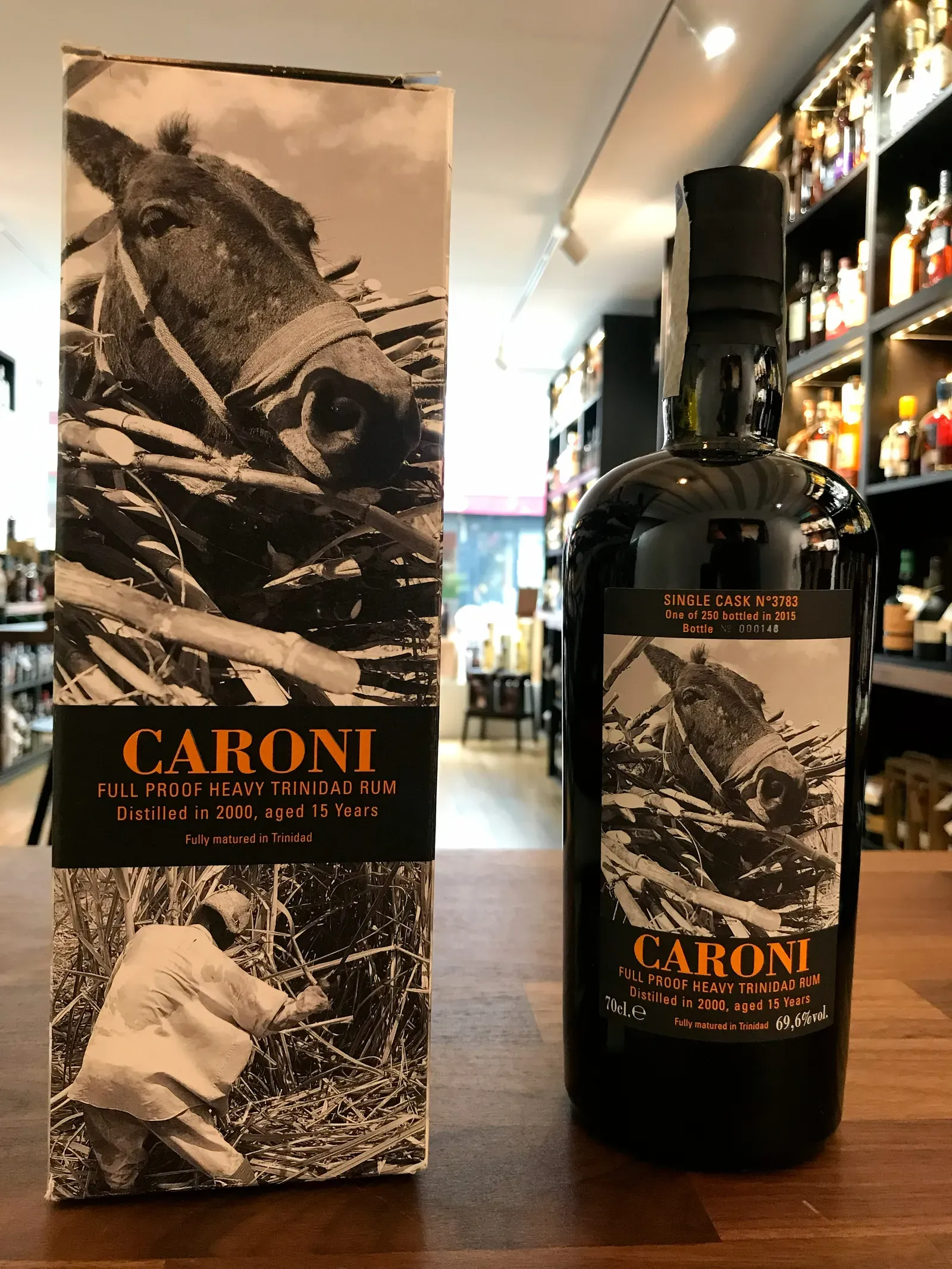
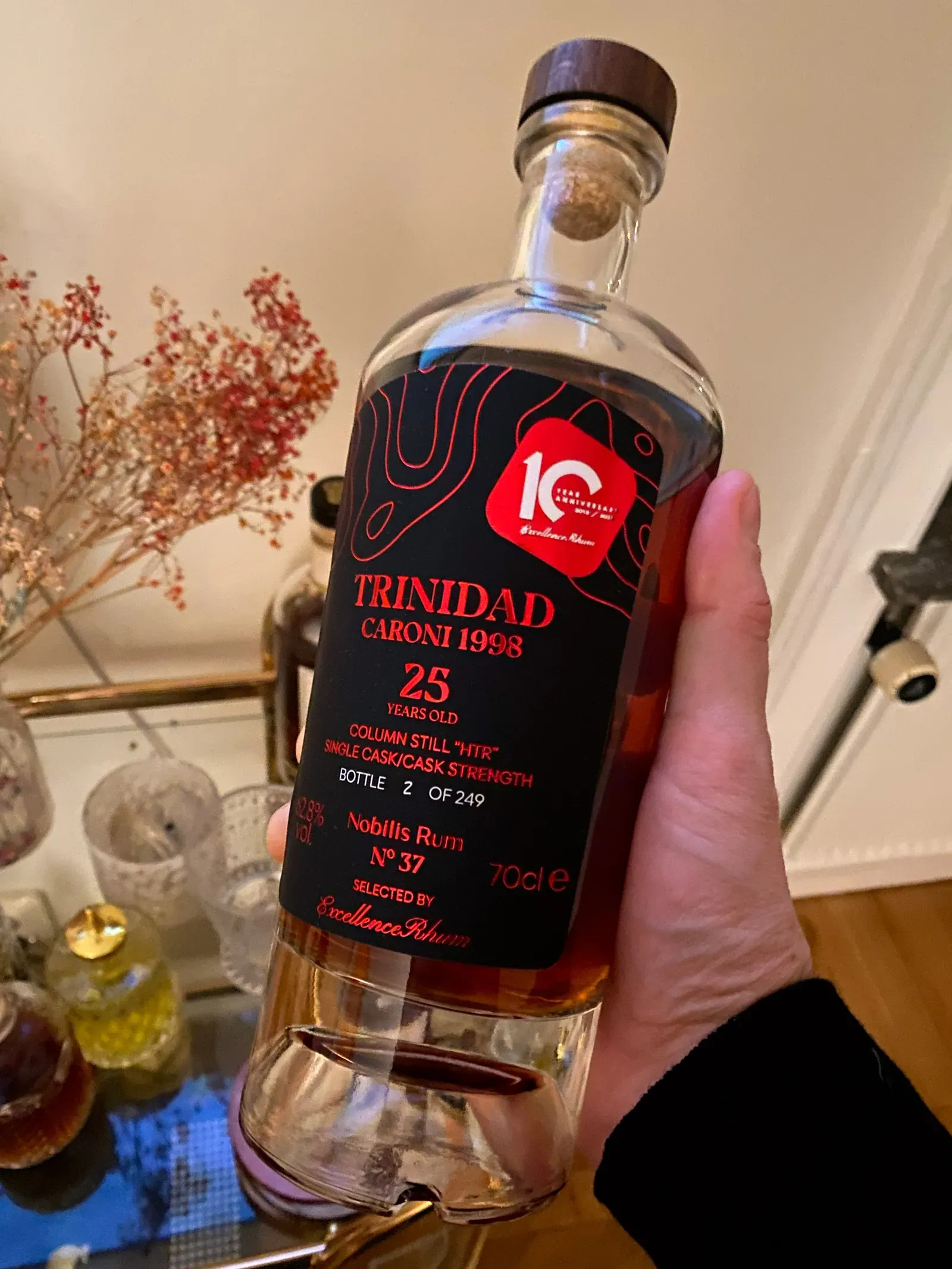
Archive photographs — Caroni bottles and cases.