File 01
01 / 07
From sugar to silence
Caroni was never just a distillery: it was the liquid heart of a sugar complex that shaped central Trinidad for more than a century. To understand the rum, first understand the cane.
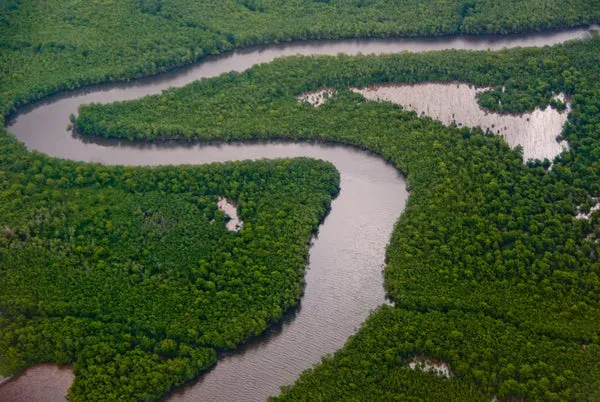
The Caroni plain
In west-central Trinidad lies the Caroni plain, a broad alluvial lowland named after the river that crosses it. From the 19th century its waterlogged soils were given over to sugar cane — worked first by enslaved labour and, after abolition in 1838, by tens of thousands of indentured workers who arrived from India, a legacy that still runs deep in Trinidadian society.
As on most sugar islands, distillation arose from thrift: molasses, the syrupy residue of sugar crystallisation, was too valuable to discard. Ferment it, distil it, and you have rum. Caroni belongs to this tradition of molasses-based rum, unlike the so-called agricole rums made from pure cane juice. The Caroni river, some forty kilometres long, waters the plain and feeds a distillery that would later make it one of its secret assets.
The sugar empire and the arrival of Tate & Lyle
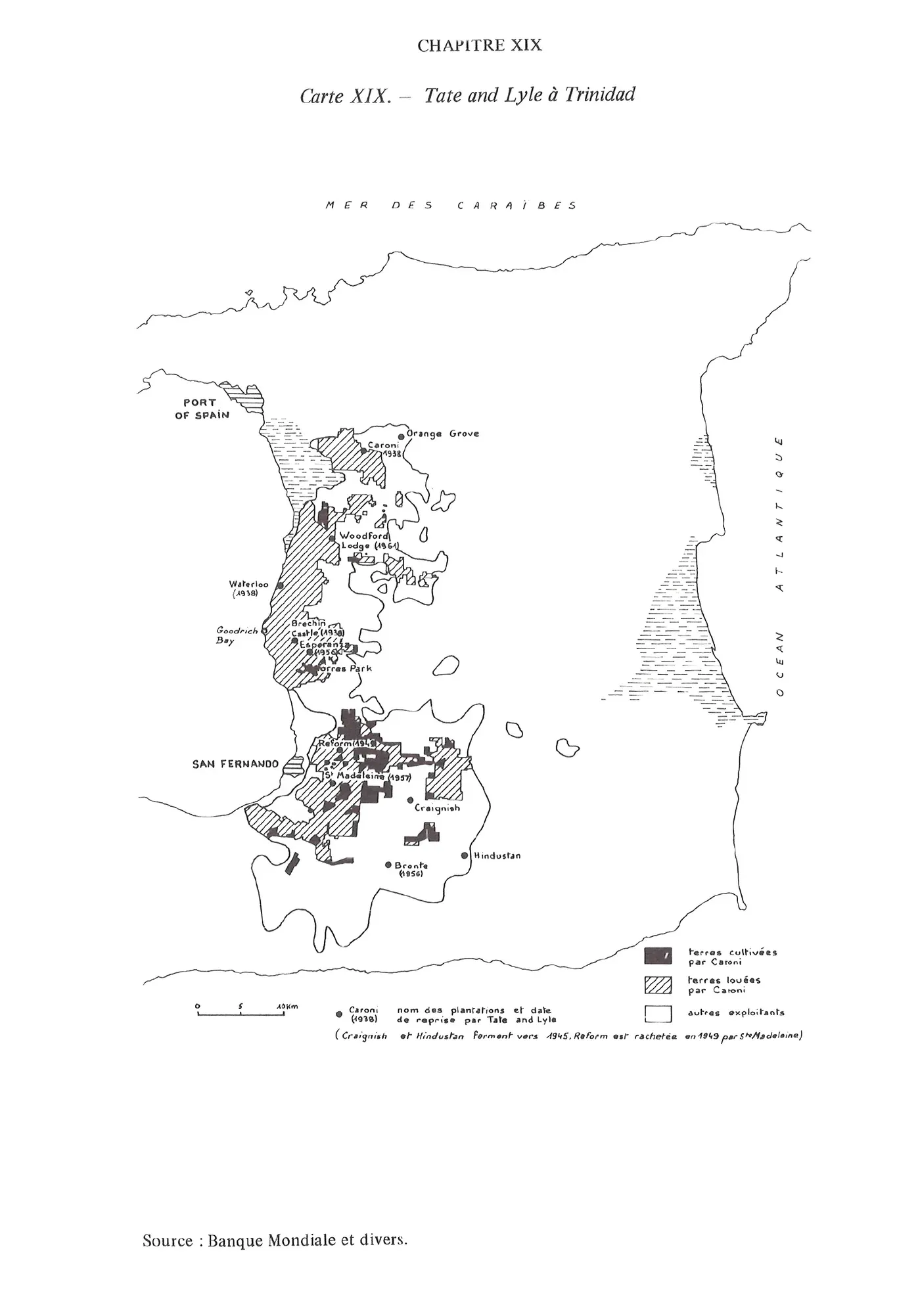
Through the 20th century, activity centred on Caroni Ltd, the entity that brought together the plantations, sugar factories and the distillery. In 1937, after years of talks, the British conglomerate Tate & Lyle took control, merging the neighbouring Caroni and Waterloo estates into a single contiguous block. Over the following decades Caroni absorbed its rivals (Esperanza, Providence, Ste. Madeleine) and grew into an agricultural empire without precedent. At the height of harvest it employed as many people as all of the island's oil companies combined.
The distillery ran a motley collection of stills, assembled through successive takeovers. From 1943, a wooden greenheart Coffey still salvaged from Waterloo joined the old cast-iron apparatus — a type of machine no longer even manufactured by then. From this accumulation comes Caroni's fundamental duality: light rums, suppler, and heavy rums, loaded with aromatic compounds, which would later make the house's name.
Supplier to the Royal Navy
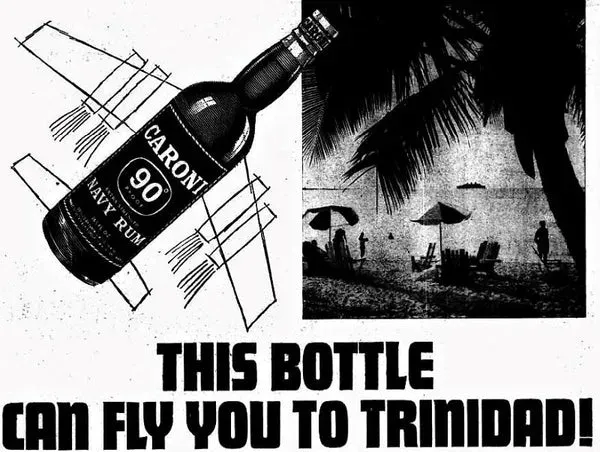
For decades, Caroni rum also fed the famous daily ration of the Royal Navy, a tradition born in the 17th century and abolished only on 31 July 1970. The blend served on board mixed rums from Guyana, Trinidad and Jamaica; the Trinidadian share leaned heavily on Caroni. The house produced for industry long before it produced for enthusiasts: most of its output went out in bulk, in blends and in anonymous orders. Very few people at the time even knew the distillery's name.
Back then, nobody cared about Caroni. Nobody. It was just one supplier among many.
Nationalisation and dependence on sugar
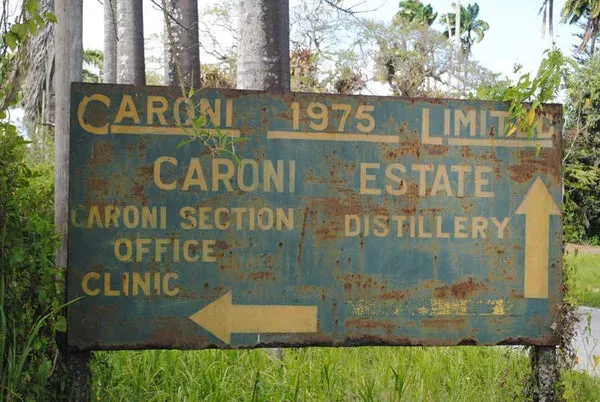
By the early 1970s, Caroni's dominance and near-monopoly had made it a symbol for Trinidadian nationalist movements. In 1970 the state acquired 51% of the company; in 1975 Tate & Lyle sold the remainder and withdrew. The new Caroni (1975) Ltd, wholly state-owned, inherited an already compromised position: the very next year it posted a loss of five million pounds.
Yet the company's fate stayed tied to the global sugar trade — and that market turned: subsidised European beet competition, eroding guaranteed prices, very high production costs. In Trinidad, rich in oil and gas, the economy was steering away from agriculture. Between 1975 and 2002 the state propped up Caroni (1975) Ltd to the tune of 4.8 billion TT dollars — nearly 625 million euros — for a sugar that cost more to make than to sell.
2003: the closure
At the turn of the 2000s the state began dismantling the sugar industry. Deprived of a steady supply of molasses, and housed in a dilapidated plant that would have needed costly refurbishment, the distillery stopped producing in 2003. The closure remains, to this day, one of the most contested episodes of Trinidadian political life: nearly 8,000 workers were laid off, and it is estimated that a quarter of the island's population depended, directly or indirectly, on the industry.
At the time it was a local industrial tragedy, not an event for the rum world. Almost no one imagined that the casks left behind would give rise to one of the great spirits legends of the early 21st century. That story — the second life of Caroni in the hands of bottlers — begins exactly where the distillery stops.
Timeline
-
1918
Official birth
The Caroni distillery settles on the Old Southern Main Road, where the sugar factory already stood. Its very first still is an ageing cast-iron machine.
-
1935
The August fire
A blaze tears through the bonded warehouse; rivers of burning rum threaten the rest of the site.
-
1937
Tate & Lyle takes over
The British conglomerate merges the Caroni and Waterloo estates and founds Caroni Ltd.
-
1943
The greenheart Coffey still
A wooden Coffey still salvaged from Waterloo goes into service — a machine already impossible to source at the time.
-
1970-75
Nationalisation
The state buys Caroni from Tate & Lyle. Caroni (1975) Ltd is born, wholly owned by Trinidad & Tobago.
-
1980
Four columns
The Gebrüder Herrmann plant lifts capacity to 6,000 gallons of alcohol a day and widens the range.
-
2003
Last distillation
Starved of molasses by the collapse of sugar, and too dilapidated to refurbish cheaply, the distillery stops.
-
2006-10
The ghost company
Caroni (1975) Ltd manages only its debt; its last casks go to Angostura in 2010.
In a few figures
1918
Official founding of the distillery
2003
Last year of distillation
4.8 bn TT$
Public aid paid out from 1975 to 2002
~8000 jobs
Workers laid off at closure